

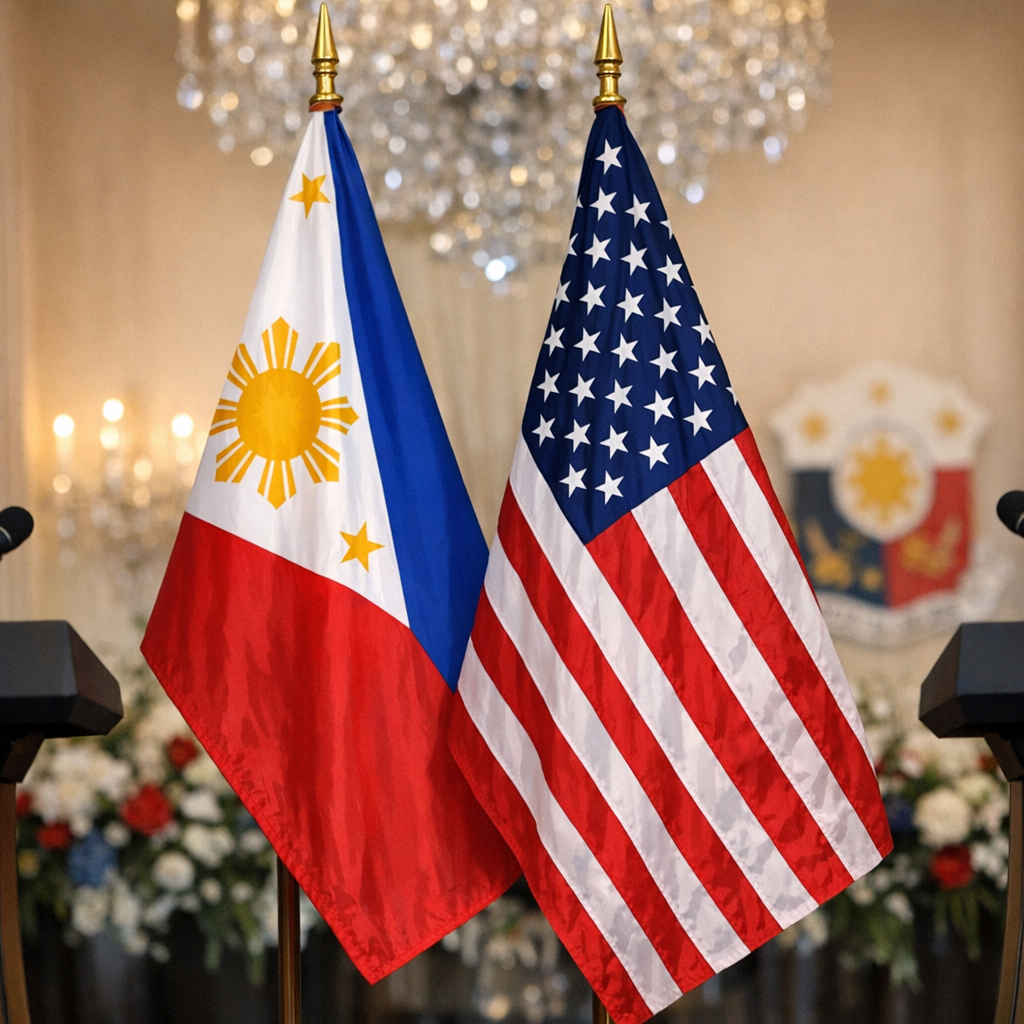
The Philippines and the United States share a longstanding and multifaceted relationship, characterized by deep historical ties, robust economic interactions, and strategic military alliances. This partnership has continually evolved, adapting to the changing geopolitical landscape and the mutual interests of both nations.
Historical Foundations and Diplomatic Milestones
Formal diplomatic relations between the Philippines and the United States were established on July 4, 1946, marking the Philippines’ independence from American colonial rule. Over the decades, this relationship has been fortified through various treaties and agreements, underscoring a commitment to mutual defense and cooperation.
In February 2026, both nations commemorated the 80th anniversary of their diplomatic ties by unveiling a commemorative logo. Philippine Ambassador to the U.S., Jose Manuel Romualdez, emphasized that the logo symbolizes “eight decades of shared struggles, shared values, and shared aspirations.” This event highlighted the enduring nature of the alliance and a shared vision for the future.
Economic Interactions and Trade Relations
The economic relationship between the Philippines and the United States is substantial, encompassing trade, investments, and development assistance. The U.S. has consistently been one of the Philippines’ top trading partners, with bilateral trade covering a wide array of goods and services.
In 2025, the U.S. economy demonstrated resilience, with a real GDP growth of 2.2%, aligning with the average annual rate from 2000 to 2024. This economic stability presents opportunities for enhanced trade and investment between the two nations, fostering economic growth and development.
Strategic Military Cooperation
Military collaboration remains a cornerstone of the Philippines-U.S. relationship. The Mutual Defense Treaty of 1951 laid the foundation for defense cooperation, which has been reinforced through joint military exercises and capacity-building initiatives.
In recent years, both countries have reaffirmed their commitment to regional security and stability. This includes collaborative efforts in counterterrorism, maritime security, and disaster response, reflecting a shared interest in maintaining peace and order in the Indo-Pacific region.
People-to-People Connections
Beyond formal agreements, the bond between the Philippines and the United States is strengthened by deep people-to-people connections. The Filipino diaspora in the U.S. contributes significantly to cultural exchange and economic ties, while educational and professional exchanges continue to build mutual understanding and cooperation.
Looking Ahead
As the global landscape evolves, the Philippines and the United States are poised to further enhance their partnership. Ongoing dialogues and collaborations in areas such as technology, climate change, and public health are expected to open new avenues for cooperation, ensuring that the alliance remains robust and responsive to contemporary challenges.
The enduring relationship between the Philippines and the United States stands as a testament to shared values and mutual interests. By building upon this solid foundation, both nations can look forward to a future of continued collaboration and shared prosperity.