

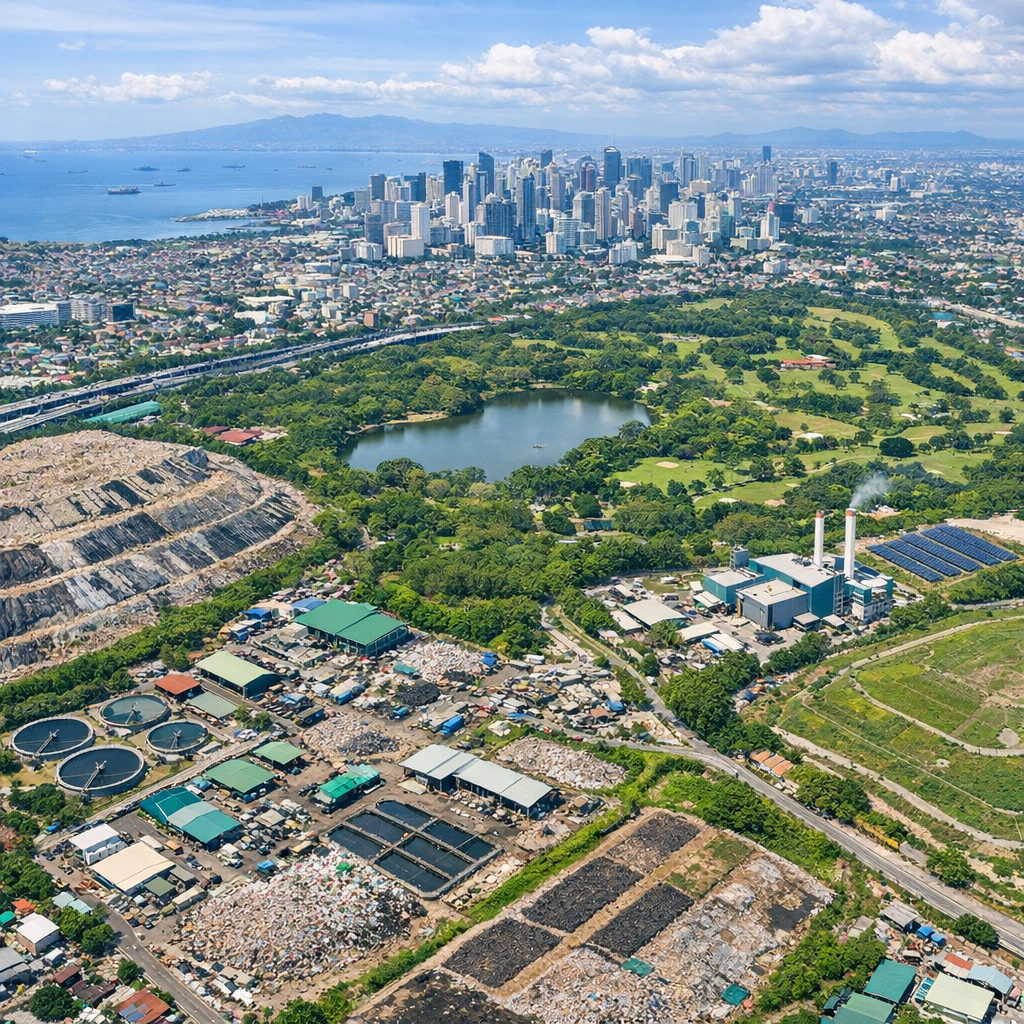
Manila, a bustling metropolis, faces significant environmental challenges. However, concerted efforts by the government and various organizations are paving the way for a more sustainable future.
Urban Greening Initiatives
The Department of Environment and Natural Resources-National Capital Region (DENR-NCR) has been at the forefront of urban greening. By creating mini-forests, linear parks, and tree corridors within the city, they aim to integrate nature into urban spaces, enhancing air quality and biodiversity. These green spaces are established in schools, government offices, and vacant lots, contributing to a healthier urban environment.
Waste Management Strategies
Addressing the mounting waste challenges, Manila City launched a 10-year Solid Waste Management Plan focused on waste reduction and source segregation. This plan emphasizes the importance of proper waste disposal and the role of the community in maintaining cleanliness. Additionally, the Metropolitan Manila Development Authority (MMDA) and the Department of Energy (DOE) have collaborated on a waste-to-energy initiative. This project aims to convert solid waste into electricity, reducing landfill use and contributing to the region’s energy supply.
Climate Resilience Efforts
Recognizing the impacts of climate change, the Climate Change Commission (CCC) has partnered with the MMDA and the Metro Manila Council to strengthen science-based climate action across the National Capital Region. This collaboration focuses on integrating climate science into urban planning and decision-making, ensuring that local government units are equipped to address climate risks effectively.
These initiatives reflect Manila’s commitment to environmental sustainability. Through urban greening, innovative waste management, and climate resilience strategies, the city is taking significant steps towards a more sustainable and livable future.