

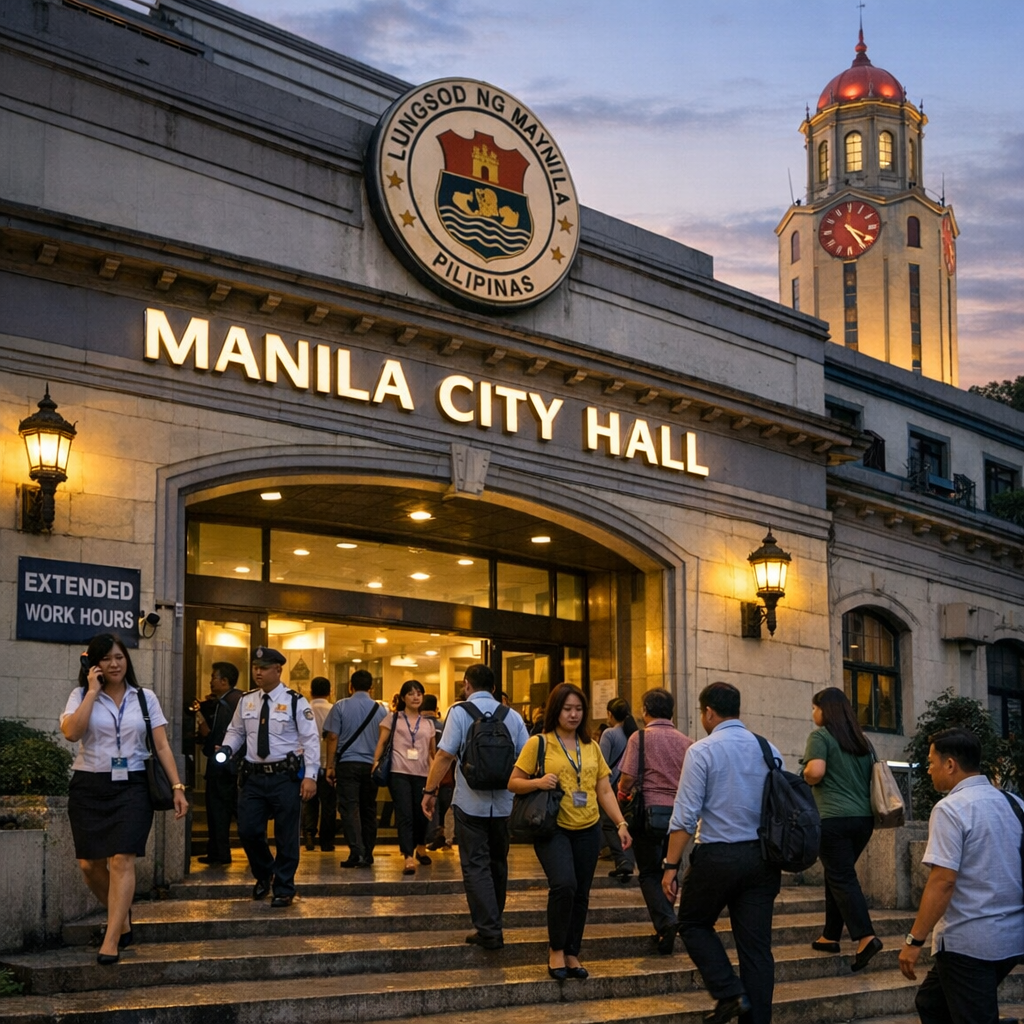
In response to escalating fuel prices, the Manila City government has implemented a four-day workweek for its employees. This initiative, outlined in Executive Order No. 8, aims to reduce operational costs and alleviate the financial burden on city workers.
Under the new schedule, city government offices operate from Monday to Thursday, with extended hours from 7 a.m. to 6 p.m. or 8 a.m. to 7 p.m. Fridays and weekends are designated as non-working days. Essential services, however, continue uninterrupted to ensure that residents receive necessary support without disruption.
Mayor Francisco “Isko” Domagoso emphasized the importance of maintaining essential operations, stating that offices providing critical services will remain functional throughout the week. This approach seeks to balance cost-saving measures with the city’s commitment to public welfare.
The decision to adopt a condensed workweek comes amid rising fuel prices, influenced by geopolitical tensions in the Middle East. By reducing the number of commuting days, the city aims to lessen fuel consumption among employees and decrease overall operational expenses.
While the four-day workweek presents potential benefits, it also poses challenges. Extended daily working hours may affect employee productivity and work-life balance. Additionally, ensuring that all public services remain efficient and accessible during the reduced workweek requires careful planning and resource allocation.
As Manila navigates this new work arrangement, continuous assessment and feedback from both employees and residents will be crucial. The city’s ability to adapt and address emerging challenges will determine the long-term viability of the four-day workweek in enhancing operational efficiency and serving the community effectively.