

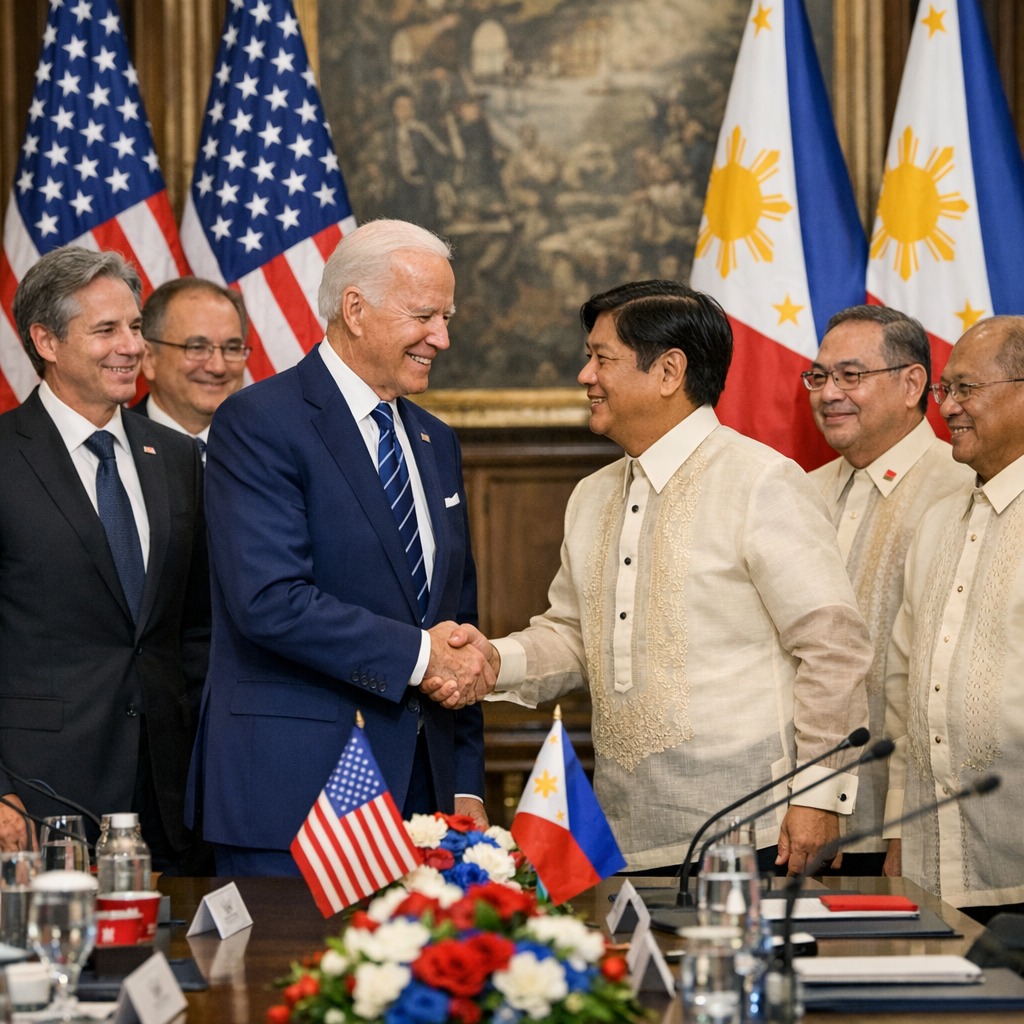
The relationship between the United States and the Philippines has been a cornerstone of both nations’ foreign policies for decades. This enduring alliance, rooted in shared history and mutual interests, continues to evolve in response to global dynamics.
Historical Foundations
Formal diplomatic relations between the U.S. and the Philippines were established on July 4, 1946, marking the Philippines’ independence from American colonial rule. Over the years, this bond has been characterized by robust military cooperation, economic ties, and cultural exchanges.
Recent Developments
In February 2026, both nations launched a commemorative logo celebrating the 80th anniversary of their diplomatic relations. Philippine Ambassador to the U.S., Jose Manuel Romualdez, emphasized that the logo symbolizes “eight decades of shared struggles, shared values, and shared aspirations.” This initiative underscores the commitment of both countries to strengthen their partnership in defense, security, and economic collaboration.
Economic Ties
The U.S. economy, being the world’s largest by nominal GDP, plays a significant role in global trade. In 2025, the U.S. GDP reached $30.8 trillion, with a real GDP growth of 2.2%. This economic stability presents opportunities for increased trade and investment between the U.S. and the Philippines.
Strategic Cooperation
Beyond economic ties, the U.S. and the Philippines continue to collaborate on regional security. As a major non-NATO ally, the Philippines benefits from U.S. support in defense and counter-terrorism efforts. This partnership is crucial in addressing challenges in the Indo-Pacific region.
Looking Ahead
As both nations commemorate 80 years of diplomatic relations, the focus remains on deepening cooperation in various sectors. Initiatives aimed at enhancing trade, bolstering defense capabilities, and fostering people-to-people connections are expected to shape the future trajectory of U.S.-Philippines relations.
In conclusion, the alliance between the United States and the Philippines stands as a testament to the enduring power of shared values and mutual interests. As global dynamics shift, this partnership is poised to adapt and thrive, benefiting both nations and the broader international community.