

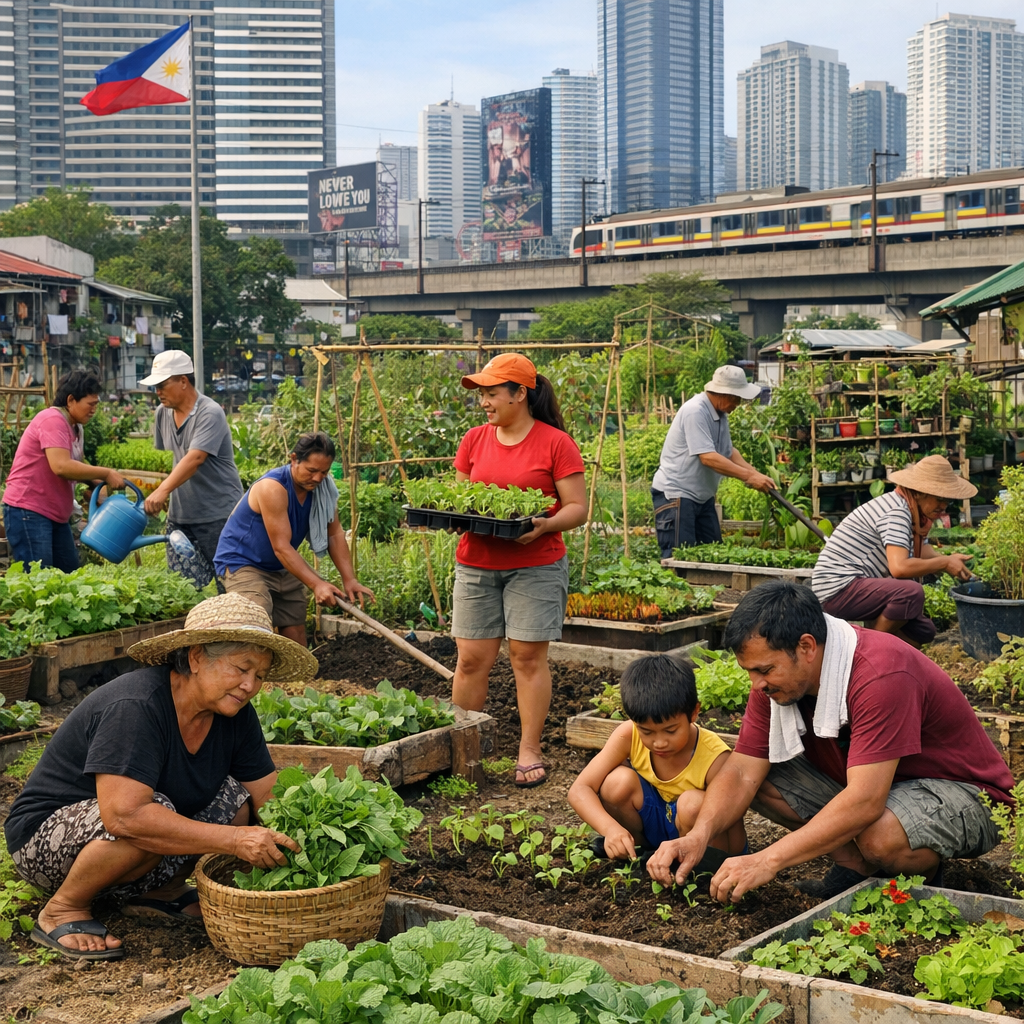
In the heart of Manila, amidst its bustling streets and towering buildings, a quiet revolution is taking root. Urban gardening initiatives are sprouting across the city, transforming underutilized spaces into verdant oases that provide fresh produce, foster community spirit, and promote environmental sustainability.
Community-Led Initiatives
One notable example is the Bel-Air Pilot Site and Bel-Air Park Farm, established by Urban Farmers PH. This 530-square-meter idle lot in Makati City has been transformed into a thriving urban farm, serving as a model for sustainable agriculture in the city. The organization has since expanded its efforts, introducing projects like the BGC Community Farm and the Pasig City Rainforest Park Urban Farm, engaging over 100 farmers and thousands of volunteers in the process.
Government and NGO Support
Government agencies and non-governmental organizations have also played a pivotal role in promoting urban agriculture. The Department of Science and Technology-National Capital Region (DOST-NCR), in partnership with the Department of Agriculture’s Bureau of Plant Industry (DA-BPI), has been implementing the Urban Agriculture Bayanihan Project. This initiative aims to provide accessible and affordable safe food to urban poor families in Metro Manila by promoting gardening techniques such as hydroponics, vertical, and containerized gardening.
Similarly, the ICTSI Foundation has supported the ‘Buhay sa Gulay’ program of the Don Bosco Parish in Tondo. This project converted a portion of the parish’s football field into 49 vegetable plots, providing an income-generating activity for residents whose livelihoods were impacted by the pandemic. With the foundation’s support, the number of plots is set to increase to 200, accommodating more families from 17 barangays.
Educational Workshops and Community Engagement
Educational workshops have been instrumental in equipping residents with the skills needed for successful urban gardening. For instance, the Bureau of Plant Industry–Crop Research and Production Support Division (BPI-CRPSD) conducted a workshop that drew nearly 50 participants from nearby communities. These sessions covered the basics of plant propagation and soil preparation, empowering attendees to start their own home gardens.
Environmental and Social Impact
Beyond providing fresh produce, these urban gardens contribute to environmental sustainability by reducing plastic waste and promoting recycling. Projects like EcoGardens utilize recycled materials in their construction, saving more than 10 metric tons of plastic from entering waterways. Moreover, these gardens serve as educational and therapeutic spaces, offering residents, especially children, a chance to connect with nature and learn about sustainable practices.
The rise of urban gardening in Manila is more than just a trend; it’s a testament to the resilience and ingenuity of its people. By transforming idle spaces into productive gardens, communities are not only addressing food security but also fostering a sense of unity and environmental stewardship. As these initiatives continue to flourish, they pave the way for a greener, more sustainable urban future.