

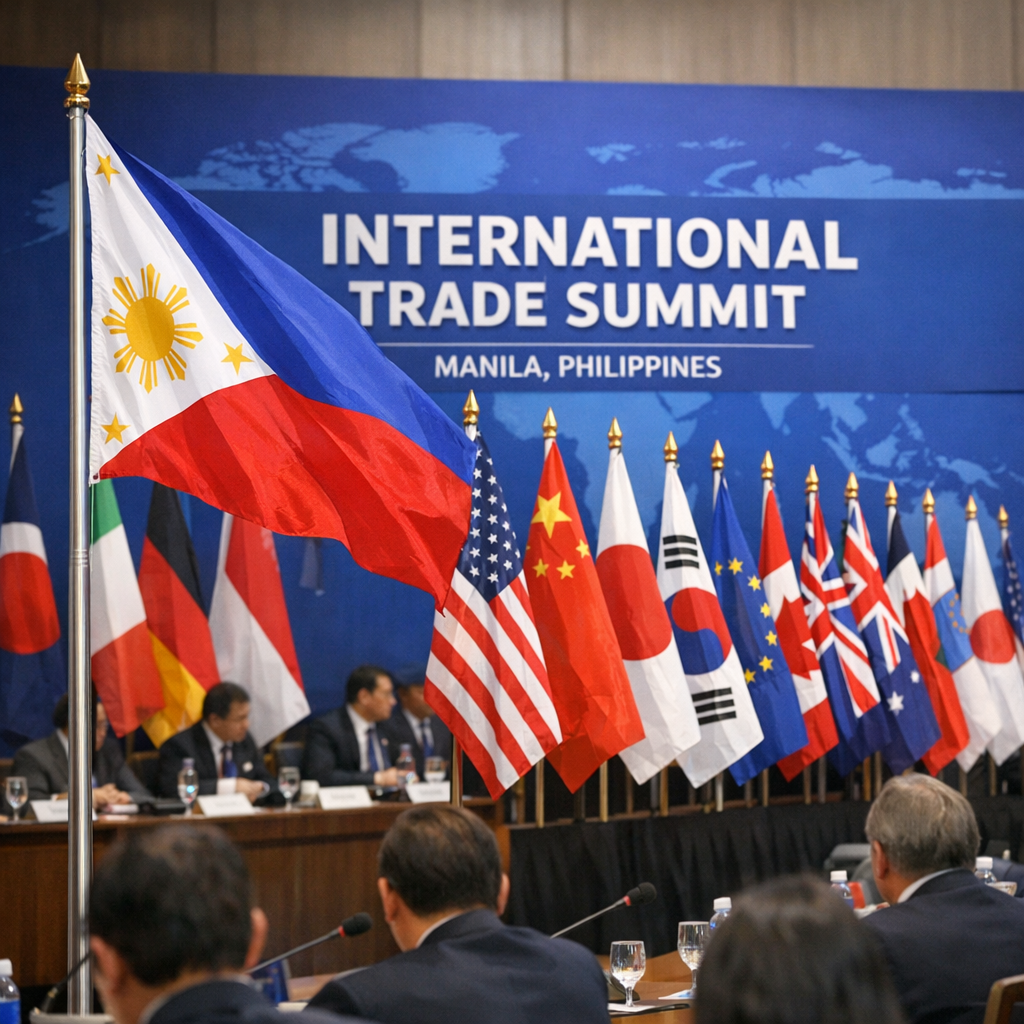
The Philippines has been proactive in engaging with various international trade agreements to bolster its economic growth and strengthen global partnerships. These agreements aim to enhance market access, attract investments, and promote sustainable development.
ASEAN Trade in Goods Agreement (ATIGA)
As a member of the Association of Southeast Asian Nations (ASEAN), the Philippines is a signatory to the ASEAN Trade in Goods Agreement (ATIGA). Established in 2010, ATIGA seeks to create a single market and production base within the ASEAN region by facilitating the free flow of goods. This agreement encompasses tariff liberalization, trade facilitation measures, and the simplification of rules of origin, thereby promoting intra-regional trade and economic integration.
Philippines-Japan Economic Partnership Agreement (PJEPA)
In 2008, the Philippines entered into its first bilateral free trade agreement with Japan, known as the Philippines-Japan Economic Partnership Agreement (PJEPA). This comprehensive agreement covers trade in goods and services, investments, movement of natural persons, intellectual property, customs procedures, and government procurement. Since its implementation, PJEPA has contributed to an improved trade balance between the two nations, with a notable increase in exports of agricultural products such as fresh bananas.
Philippines-European Free Trade Association (EFTA) Free Trade Agreement
The Philippines and the European Free Trade Association (EFTA) member states—comprising Iceland, Liechtenstein, Norway, and Switzerland—signed a free trade agreement in 2016, which entered into force in 2018. This agreement provides the Philippines with duty-free market access for all industrial and fisheries tariff lines, as well as significant concessions on agricultural exports. Additionally, it includes provisions on trade in services, investment, intellectual property, government procurement, and sustainable development.
Regional Comprehensive Economic Partnership (RCEP)
In 2020, the Philippines, along with 14 other Asia-Pacific countries, signed the Regional Comprehensive Economic Partnership (RCEP) agreement, which entered into force in 2022. RCEP is the world’s largest free trade agreement, covering trade in goods and services, investment, intellectual property, e-commerce, competition, small and medium enterprises, and government procurement. The Philippine Senate ratified the country’s membership in RCEP in February 2023, signaling a commitment to deeper regional economic integration.
Ongoing Negotiations with the European Union
The Philippines is actively negotiating a free trade agreement with the European Union (EU). As of February 2026, both parties have substantially concluded the Trade and Sustainable Development (TSD) chapter, which includes binding commitments on human rights, labor rights, anti-corruption measures, and climate action. This agreement is particularly significant as the Philippines’ preferential trade access under the Generalized Scheme of Preferences Plus (GSP+) is set to expire in 2027. Concluding the FTA would ensure continued favorable trade terms and strengthen economic ties with the EU.
Through these strategic engagements in global trade agreements, the Philippines aims to enhance its economic resilience, diversify its export markets, and foster sustainable development. These initiatives reflect the country’s commitment to integrating into the global economy while safeguarding national interests and promoting inclusive growth.